
Selling pet products into China & SEA

Updated: Jul 28
To sell pet products into China and SEA, use cross-border e-commerce: list on Tmall Global, Douyin or RED for China and Shopee/Lazada for SEA, fulfil via bonded warehouse, build demand with RED/Douyin content, and follow category and labelling rules.
Key takeaways
Pet products sells well cross-border in China and SEA.
China: Tmall Global, Douyin, RED; SEA: Shopee, Lazada.
Cross-border (CBEC) avoids needing a China entity.
Content-led demand (RED/Douyin) plus compliant listings.
About shopfever: a one-stop cross-border e-commerce partner and official Tmall Global distributor — import, warehousing, store operations, logistics, KOL marketing and data — helping global brands sell into China and Asia.
Why pet products works cross-border
Pet products is well-suited to cross-border e-commerce: Chinese and SEA consumers actively seek trusted imported pet products, and CBEC lets you sell under your existing entity without a local company or full registration. China's pet economy is booming, and pet supplies and treats sell well cross-border; check specific rules for pet food and ingestibles.
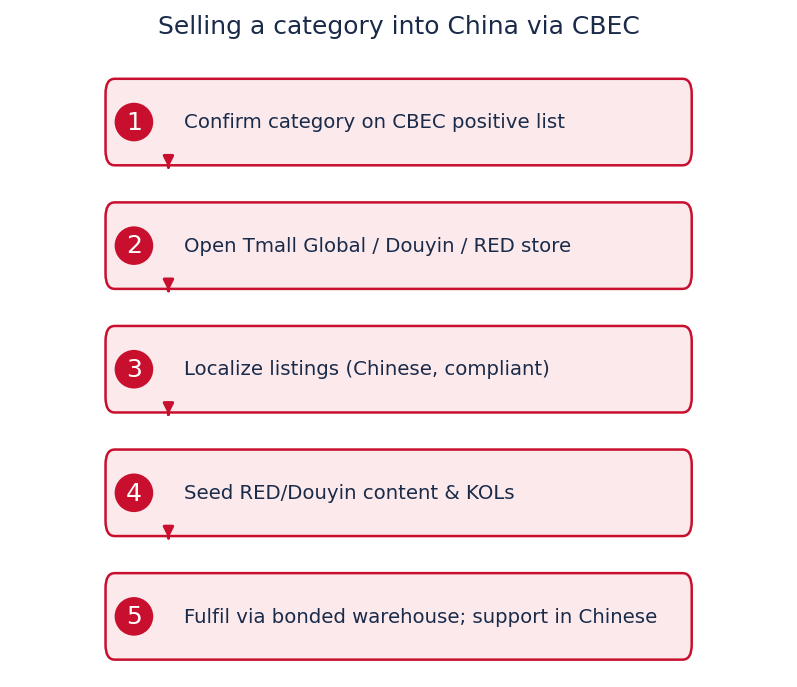
Fig. 1: Selling a category into China via CBEC
Channels for China and SEA
China: Tmall Global (breadth), RED & Douyin (content-led).
SEA: Shopee (largest), Lazada LazGlobal (cross-border).
Demand: RED/Douyin seeding, KOLs, paid ads.
Fulfilment: bonded warehouse (China), local logistics (SEA).
Getting started
Confirm category eligibility and labelling rules for each market, pick the right storefronts, localize listings and content, and plan fulfilment. A one-stop partner can run China and SEA operations and Chinese-language service so you focus on product.
Pet watch-outs
China's pet economy is booming and pet supplies sell well cross-border, but pet food and ingestibles can have specific import rules. Confirm category requirements, emphasise safety and quality, and use content showing real pets and owners to build trust.
Confirm pet-food/ingestible rules
Emphasise safety and quality
Use real pet/owner content
List on Tmall Global + RED/Douyin
Bottom line
Pet products is a strong cross-border opportunity in China and SEA. Sell under your existing entity via CBEC, list on the right storefronts (Tmall Global/RED/Douyin for China, Shopee/Lazada for SEA), generate content-led demand, and stay compliant on category eligibility and labelling — ideally with a partner running operations and service.
FAQ
Do we need a China entity to sell pet products?
No — cross-border (CBEC) lets you sell under your existing entity.
Which platforms for SEA?
Shopee leads the region; Lazada's LazGlobal supports cross-border selling.
What's the biggest compliance watch-out?
Category eligibility (positive list) and accurate, compliant labelling and claims.
Want to sell pet products into China and SEA? shopfever runs cross-border across Tmall Global, RED/Douyin and Shopee/Lazada. Talk to us. |
Inside China’s pet boom
China’s pet economy has grown rapidly, led by younger owners in tier-1 and tier-2 cities. The opportunity is real but nuanced: premium pet food and health supplements are performing strongly, while accessories and toys are more commoditised and margin-pressured. Douyin has become a major discovery channel for pet products, Chinese pet owners are increasingly sophisticated about ingredients and provenance, and domestic brands now compete hard on quality perception — so a clear, category-specific strategy matters more than ever.
Premium pet food & supplements perform best
Accessories/toys are more commoditised
Douyin is a key discovery channel
Owners increasingly value ingredients & provenance
Pet product compliance and entry
Pet supplies such as accessories and grooming generally sell smoothly cross-border, but pet food and ingestibles can carry specific import and registration requirements — confirm the rules for your exact product before launch. Emphasise safety, quality and certifications, use content that features real pets and owners to build trust, and list on Tmall Global alongside RED/Douyin content. Start cross-border to validate demand, then scale the categories that perform.
Accessories sell smoothly cross-border
Pet food/ingestibles may have specific rules
Emphasise safety, quality, certifications
Use real pet/owner content; list on Tmall Global
A channel and content plan for pet products
Winning in pet products is as much about content as compliance. Build a base of authentic KOC reviews to create searchable word-of-mouth, layer mid-tier KOLs for reach and topics, and use search and feed ads to capture high-intent shoppers. Premium pet food and supplements lead; use real pets and owners in content to build trust. Connect all of it to a storefront so discovery flows into purchase within one ecosystem.
KOC seeding for authentic, searchable reviews
Mid-tier KOLs for reach and momentum
Search/feed ads to capture intent
A storefront to convert discovery into sales
Metrics that matter and how to scale
Judge performance with layered metrics rather than vanity numbers: reach and engagement for content, search lift and saves for consideration, and conversion, repeat rate and return rate for commercial outcomes. Start focused on one or two hero products, prove the economics against your category margins, then widen the range and add markets. Keep listings, ads and creator briefs compliant throughout, and maintain fast Chinese-language service to protect ratings — which directly affect how much traffic your store receives.
Working with a one-stop partner
Selling into China touches storefront, logistics, marketing, payments and service at once, and each requires Mandarin-speaking operations and platform expertise. Rather than coordinating a patchwork of vendors, most global brands work with a single cross-border partner that can join the pillars together, run day-to-day operations during Chinese business hours, and localize content and service properly. That turns a complex, multi-part project into one accountable relationship — freeing the brand to focus on product and positioning while demand, conversion and retention are managed end-to-end across China and, where relevant, wider Asian markets.


Comments