
How to sell on RED (Xiaohongshu) as a foreign brand

Updated: Jul 28
Foreign brands sell on RED by opening a verified account/store, seeding authentic KOC/KOL notes, using RED search and feed ads (Juguang) to capture intent, and converting via a RED store or Tmall Global — fulfilled cross-border with Chinese-language service.
Key takeaways
RED is both a research engine and a storefront.
Authentic KOC/KOL content drives discovery and trust.
RED search & feed ads (Juguang) capture intent.
Convert via RED store or Tmall Global; fulfil cross-border.
About shopfever: a one-stop cross-border e-commerce partner and official Tmall Global distributor — import, warehousing, store operations, logistics, KOL marketing and data — helping global brands sell into China and Asia.
RED as a sales channel
RED (Xiaohongshu/Little Red Book) is where affluent Chinese consumers research before buying — and increasingly where they buy. For foreign brands, that means RED is not just a seeding channel but a storefront, especially for beauty, wellness, fashion and lifestyle categories with strong content appeal.
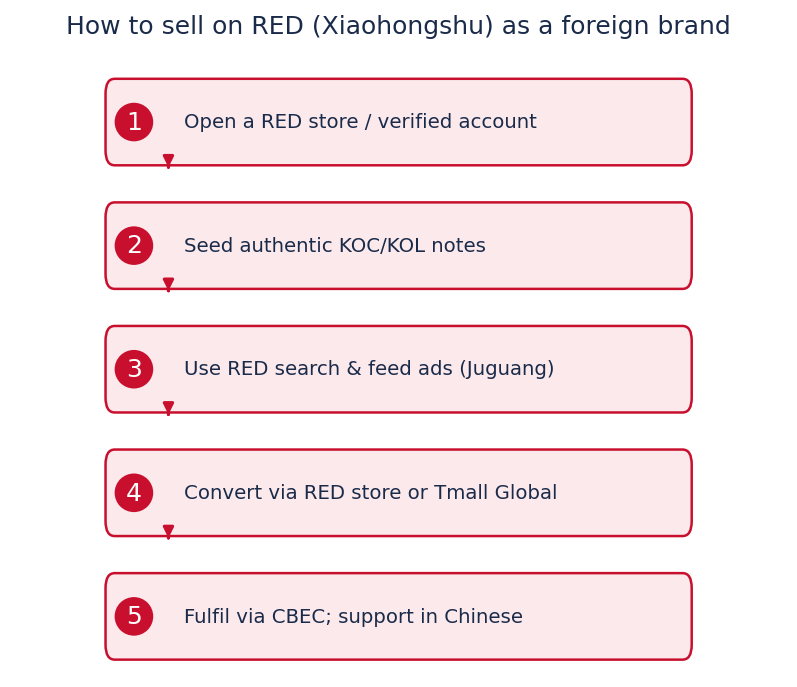
Fig. 1: How to sell on RED as a foreign brand
How foreign brands sell on RED
Open a verified (enterprise) account / RED store.
Seed authentic KOC notes; amplify with KOLs via Pugongying.
Use RED search and feed ads (Juguang) to capture intent.
Convert via RED store or link to Tmall Global.
Fulfil via cross-border; support in Chinese.
What makes it work
RED rewards authenticity: useful, real content from credible creators outperforms hard ads, and compliant claims keep you out of trouble. Build a content base first, then amplify the best with paid, and ensure the buying path — store or Tmall Global — is smooth.
Content that converts
On RED, conversion follows trust: authentic reviews, comparisons, tutorials and real results outperform polished ads. Keep claims compliant, make the buying path (RED store or Tmall Global link) obvious, and amplify only content that already earns genuine engagement.
Authentic reviews and tutorials win
Keep claims compliant
Make the buying path obvious
Amplify proven content with paid
Bottom line
RED is both China's research engine and a growing storefront. Foreign brands sell by combining a verified account, authentic KOC/KOL content, RED search and feed ads, and a smooth path to purchase via a RED store or Tmall Global — all fulfilled cross-border with Chinese-language service.
FAQ
Is RED only for marketing, not selling?
Both — RED supports research and trust and increasingly hosts storefronts; many brands also convert via Tmall Global.
Do we need a verified account?
Yes — an enterprise (verified) account unlocks commercial features and creator collaborations.
What categories work best?
Beauty, wellness, fashion and lifestyle, given RED's affluent, content-driven audience.
Want to turn RED into a sales channel? shopfever runs RED accounts, KOC/KOL seeding, ads and cross-border fulfilment. Talk to us. |
Content and compliance on RED
RED rewards authenticity: useful, real content from credible creators outperforms polished advertising. Keep claims compliant — avoid absolute or medical language, and for regulated categories respect the relevant rules. Seed a base of KOC reviews, amplify the best with mid-tier KOLs via Pugongying, and use RED search and feed ads to capture the high intent that RED's research-minded audience brings.
Authentic reviews beat polished ads
Keep claims compliant (no absolute/medical)
Seed KOC, amplify with KOLs via Pugongying
Use search/feed ads to capture intent
From notes to purchase: the RED funnel
RED works best when the path from discovery to purchase is short. Ensure the buying route — a RED store or a linked Tmall Global storefront — is obvious from your notes and profile, and that fulfilment and Chinese-language service are ready to convert the interest your content generates. Measure search lift and saves, not just likes, to confirm demand is building.
Working with a one-stop partner
Selling into China and Asia touches storefront, logistics, marketing, payments and service at once, each needing Mandarin-speaking operations and platform expertise. Rather than juggling multiple vendors, most global brands work with a single cross-border partner that joins these pillars together, runs day-to-day operations during local business hours, and localizes content and service properly — turning a complex, multi-part project into one accountable relationship so the brand can focus on product and positioning.
Key steps at a glance
Open a verified RED account or store
Seed authentic KOC notes
Amplify with KOLs via Pugongying
Use RED search and feed ads
Convert via RED store or Tmall Global
More frequently asked questions
Is RED only for marketing, not selling?
Both — RED supports research and trust and increasingly hosts storefronts; many brands also convert via Tmall Global.
Which categories perform best on RED?
Beauty, wellness, fashion and lifestyle, given RED's affluent, content-driven audience.
How do we measure RED performance?
Track search lift and saves alongside engagement — they signal that real demand is building.
Putting it into practice
Putting selling on RED into practice comes down to disciplined execution rather than any single tactic. The brands that succeed treat China — and wider Asia — as a connected system in which content, storefront, logistics, payments and service work together, and they start focused: validate demand, prove the economics against category margins, then scale what works instead of launching everything at once. They also localize deeply, because Chinese and Asian consumers reward brands that meet them in their own language, on their own platforms, with the speed, trust signals and service they expect. Getting the fundamentals right early compounds into durable advantage as competitors churn through trial and error.
For most global brands, the practical shortcut is a partner that has done it before. Executing selling on RED well requires Mandarin- or local-language operations, current platform knowledge, and the capacity to respond during local business hours — capabilities that are slow and costly to build in-house. A one-stop partner can join the moving parts together, keep the brand compliant with fast-changing platform and category rules, and turn Chinese and Asian demand into measurable, repeatable sales. That frees your team to focus on product, pricing and positioning while day-to-day marketing, conversion and retention are managed end to end.


Comments