
How to sell on Douyin as a foreign brand

Updated: Jul 28
Foreign brands can sell on Douyin by opening a (cross-border eligible) Douyin store, localizing short-video content, activating creators via Xingtu and the Selected Alliance, running Qianchuan ads and live commerce, and fulfilling with Chinese-language service.
Key takeaways
Douyin is interest-driven commerce — content creates demand.
Open a cross-border-eligible Douyin store.
Drive sales via creators (Xingtu/Selected Alliance), ads and live.
Localized content and fast Chinese service are essential.
About shopfever: a one-stop cross-border e-commerce partner and official Tmall Global distributor — import, warehousing, store operations, logistics, KOL marketing and data — helping global brands sell into China and Asia.
Douyin as a marketplace
Douyin pairs short video and live streaming with a full e-commerce backend, making it one of Chinas largest interest-driven marketplaces. Unlike search-led platforms, demand is created by content the algorithm surfaces to relevant users — so for foreign brands, compelling localized content is the engine of sales.
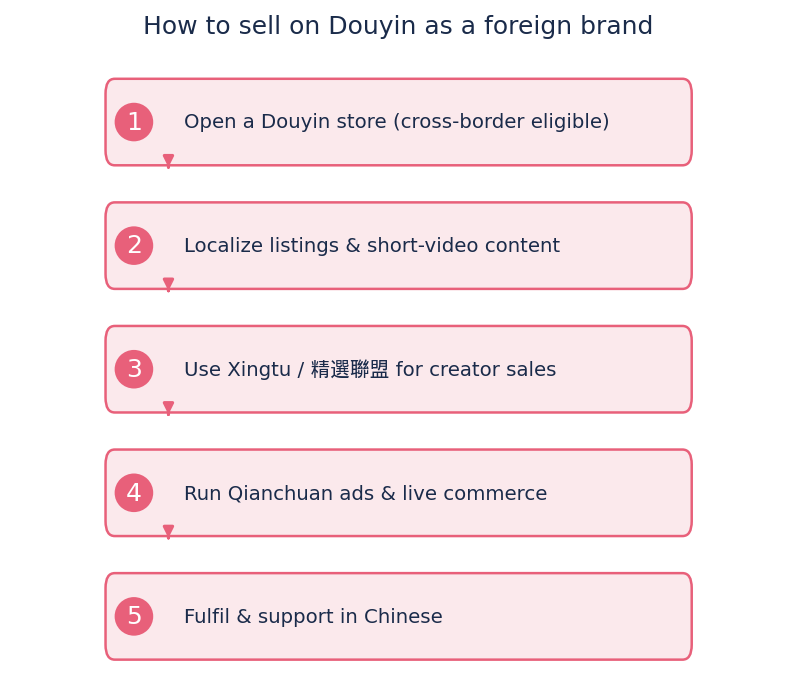
Fig. 1: How to sell on Douyin as a foreign brand
How foreign brands sell
Open a Douyin store (cross-border options available).
Localize: native short-video content, not translated ads.
Creators: Xingtu (paid) and Selected Alliance (CPS).
Ads & live: Qianchuan to amplify, live commerce to convert.
Fulfil via cross-border logistics; support in Chinese.
Getting it right
Success on Douyin requires consistent, native content, a healthy store experience score, and reliable fulfilment. Start with content and a small creator/ads test, then scale what converts. Festival campaigns (618, Double 11) are major spikes worth planning for.
Mind your store health score
On Douyin, your store experience and product scores affect traffic and access to features like the Selected Alliance. Keep fulfilment fast, service responsive and ratings high, and your content and ads will work harder because the platform rewards healthy stores.
Keep store/product experience scores high
Fast fulfilment and responsive service
Healthy scores unlock more traffic/features
Content + ads compound on a healthy store
Bottom line
Douyin is a content-driven marketplace where demand is created, not just captured. Foreign brands win by opening a cross-border store, producing native short video, activating creators via Xingtu and the Selected Alliance, amplifying with Qianchuan and live commerce, and fulfilling reliably with Chinese-language service.
FAQ
Can foreign brands open a Douyin store?
Yes — cross-border options let foreign brands sell, subject to category eligibility.
Is content or ads more important?
Content first — it creates demand; ads (Qianchuan) and creators amplify what already works.
How do we convert?
Via the store's cart, live commerce and creator-led selling, with fast Chinese service.
Want to sell on Douyin as a foreign brand? shopfever opens and runs cross-border Douyin stores with content, creators and ads. Talk to us. |
Content that sells on Douyin
Because Douyin is interest-driven, content creates demand. Short videos should hook in the first three seconds, show the product in a real scenario, make the value concrete, and prompt action; live commerce adds real-time explanation, limited-time offers and interaction. Native, localized content consistently outperforms translated brand ads, so invest in the content itself before scaling paid amplification.
Hook in the first three seconds
Show real usage; make value concrete
Use live commerce for real-time conversion
Native content beats translated ads
Store health and fulfilment
On Douyin, your store experience and product scores affect how much traffic you receive and your access to features such as the Selected Alliance. Keep fulfilment fast, service responsive and ratings high, and your content and ads work harder because the platform rewards healthy stores. Plan for festival spikes (618, Double 11) with inventory and customer-service capacity.
Working with a one-stop partner
Selling into China and Asia touches storefront, logistics, marketing, payments and service at once, each needing Mandarin-speaking operations and platform expertise. Rather than juggling multiple vendors, most global brands work with a single cross-border partner that joins these pillars together, runs day-to-day operations during local business hours, and localizes content and service properly — turning a complex, multi-part project into one accountable relationship so the brand can focus on product and positioning.
Key steps at a glance
Open a cross-border-eligible Douyin store
Produce native, localized short-video content
Activate creators via Xingtu and the Selected Alliance
Run Qianchuan ads and live commerce
Keep store scores high and fulfil reliably
More frequently asked questions
Can foreign brands open a Douyin store?
Yes, cross-border options let foreign brands sell, subject to category eligibility.
Is content or advertising more important?
Content first — it creates demand; ads and creators amplify what already works.
Why do store experience scores matter?
They affect how much traffic you receive and your access to features like the Selected Alliance.
Putting it into practice
Putting selling on Douyin into practice comes down to disciplined execution rather than any single tactic. The brands that succeed treat China — and wider Asia — as a connected system in which content, storefront, logistics, payments and service work together, and they start focused: validate demand, prove the economics against category margins, then scale what works instead of launching everything at once. They also localize deeply, because Chinese and Asian consumers reward brands that meet them in their own language, on their own platforms, with the speed, trust signals and service they expect. Getting the fundamentals right early compounds into durable advantage as competitors churn through trial and error.
For most global brands, the practical shortcut is a partner that has done it before. Executing selling on Douyin well requires Mandarin- or local-language operations, current platform knowledge, and the capacity to respond during local business hours — capabilities that are slow and costly to build in-house. A one-stop partner can join the moving parts together, keep the brand compliant with fast-changing platform and category rules, and turn Chinese and Asian demand into measurable, repeatable sales. That frees your team to focus on product, pricing and positioning while day-to-day marketing, conversion and retention are managed end to end.


Comments