
Cross-border e-commerce into China: models compared

Updated: Jul 28
There are two main ways to sell into China: cross-border e-commerce (CBEC), which needs no China entity and bypasses full product registration but has per-order purchase limits; and general trade, which requires an importer/registration but has no CBEC limits. Most brands start with CBEC.
Key takeaways
CBEC: no China entity, bonded warehouse, bypasses full registration.
CBEC purchase limits: ~RMB 5,000/order, RMB 26,000/year per consumer.
General trade: needs importer/registration (e.g. Blue Hat) but no CBEC limits.
Most brands start with CBEC to test, then add general trade to scale.
About shopfever: a one-stop cross-border e-commerce partner and official Tmall Global distributor — import, warehousing, store operations, logistics, KOL marketing and data — helping global brands sell into China and Asia.
The two models
Cross-border e-commerce (CBEC) lets foreign brands sell under their original entity, shipping via bonded warehouses, tariff-advantaged and without full product registration — ideal for testing demand. General trade means formally importing goods through a China entity/importer, with full registration (for example Blue Hat for health food), unlocking domestic channels and removing CBEC purchase limits.
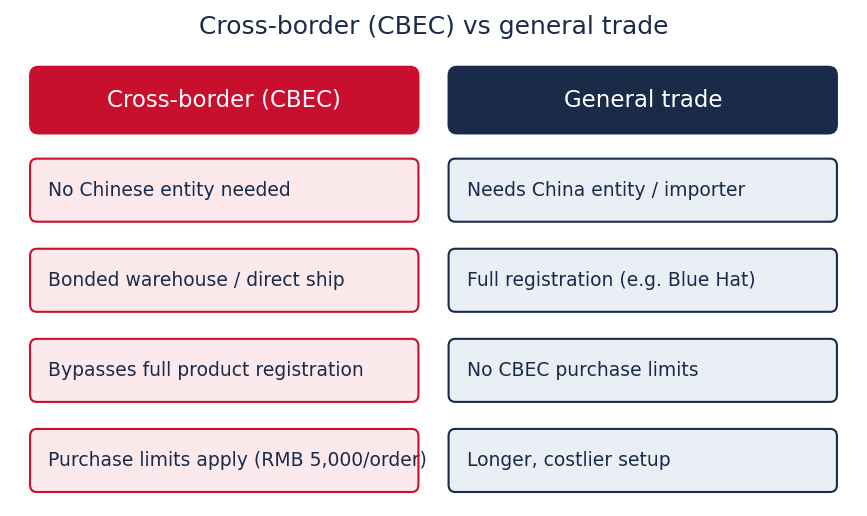
Fig. 1: Cross-border (CBEC) vs general trade
How they compare
Factor | CBEC | General trade |
|---|---|---|
China entity | Not required | Required (importer) |
Registration | Bypassed | Full (e.g. Blue Hat) |
Speed | Fast | Slower |
Purchase limits | Yes (per order/year) | No |
Which to choose
Start with CBEC to enter quickly and validate demand with lower risk and cost. As volumes grow and you want domestic distribution or to remove CBEC limits, layer in general trade. Many brands run both: CBEC for agility and general trade for scale.
A simple decision rule
Choose CBEC when speed, low risk and testing demand matter most, or when full registration would be slow or costly (e.g. supplements). Move to general trade when volumes justify domestic distribution, you need to remove CBEC purchase limits, or domestic channels become strategic.
Testing/speed/low risk → CBEC
Slow/costly registration → CBEC
Scale/domestic distribution → general trade
Need to remove CBEC limits → general trade
Bottom line
CBEC and general trade are complementary routes into China. CBEC is fast, low-risk and entity-free but capped by purchase limits; general trade needs registration and an importer but unlocks domestic scale. Start cross-border to validate demand, then add general trade as volumes grow.
FAQ
What are the CBEC purchase limits?
Around RMB 5,000 per order and RMB 26,000 per person per year.
When should we move to general trade?
When volumes justify domestic distribution or you need to remove CBEC limits and registration constraints.
Can we run both models?
Yes — many brands use CBEC for agility and general trade for scale.
Not sure which China import model fits your brand? shopfever advises on CBEC vs general trade and runs the setup. Talk to us. |
When to switch from CBEC to general trade
Start cross-border to validate demand with low risk, then consider general trade when specific triggers appear: volumes outgrow CBEC purchase limits, you want broad domestic distribution beyond bonded-warehouse fulfilment, or a category requires domestic registration (such as Blue Hat for health food) to make the claims or reach the channels you need.
Volumes exceed CBEC purchase limits
You need broad domestic distribution
A category needs domestic registration
Domestic channels become strategic
Running both models together
CBEC and general trade are not mutually exclusive. Many brands run a hybrid: cross-border for agility, new-product testing and imported positioning, and general trade for scale and domestic reach. A hybrid lets you keep the speed and lower barriers of CBEC while building the registered, domestically-distributed presence that larger volumes justify.
Working with a one-stop partner
Selling into China and Asia touches storefront, logistics, marketing, payments and service at once, each needing Mandarin-speaking operations and platform expertise. Rather than juggling multiple vendors, most global brands work with a single cross-border partner that joins these pillars together, runs day-to-day operations during local business hours, and localizes content and service properly — turning a complex, multi-part project into one accountable relationship so the brand can focus on product and positioning.
Key steps at a glance
Start cross-border to validate demand
Fulfil via bonded warehouse under CBEC
Watch CBEC purchase limits as you grow
Add general trade for domestic scale
Run a hybrid where it makes sense
More frequently asked questions
What are the CBEC purchase limits?
Around RMB 5,000 per order and RMB 26,000 per person per year — set by China customs (single-transaction RMB 5,000 / annual RMB 26,000 quota, in force since 2019 and current as of 2026).
When should we move to general trade?
When volumes exceed CBEC limits, you need domestic distribution, or a category requires domestic registration.
Can we run CBEC and general trade together?
Yes — many brands use CBEC for agility and general trade for scale simultaneously.
Putting it into practice
Putting choosing between CBEC and general trade into practice comes down to disciplined execution rather than any single tactic. The brands that succeed treat China — and wider Asia — as a connected system in which content, storefront, logistics, payments and service work together, and they start focused: validate demand, prove the economics against category margins, then scale what works instead of launching everything at once. They also localize deeply, because Chinese and Asian consumers reward brands that meet them in their own language, on their own platforms, with the speed, trust signals and service they expect. Getting the fundamentals right early compounds into durable advantage as competitors churn through trial and error.
For most global brands, the practical shortcut is a partner that has done it before. Executing choosing between CBEC and general trade well requires Mandarin- or local-language operations, current platform knowledge, and the capacity to respond during local business hours — capabilities that are slow and costly to build in-house. A one-stop partner can join the moving parts together, keep the brand compliant with fast-changing platform and category rules, and turn Chinese and Asian demand into measurable, repeatable sales. That frees your team to focus on product, pricing and positioning while day-to-day marketing, conversion and retention are managed end to end.


Comments