
China e-commerce solution for French brands

Updated: Jul 28
For France brands, a China e-commerce solution means selling cross-border (no China entity needed) via Tmall Global, Douyin or RED, with bonded-warehouse logistics, RED/Douyin/KOL marketing, Chinese payments and Chinese-language service.
Key takeaways
France brands can sell cross-border without a China entity.
Storefronts: Tmall Global, Douyin store, RED store.
Logistics via bonded warehouse; payments via Alipay/WeChat Pay.
Localized marketing and Chinese-language service are essential.
About shopfever: a one-stop cross-border e-commerce partner and official Tmall Global distributor — import, warehousing, store operations, logistics, KOL marketing and data — helping global brands sell into China and Asia.
Why cross-border suits France brands
Cross-border e-commerce (CBEC) lets France brands reach Chinese consumers under their existing entity, without a Chinese company or full product registration, shipping via bonded warehouses. It''s the fastest, lowest-risk way to test Chinese demand before committing to deeper market entry.
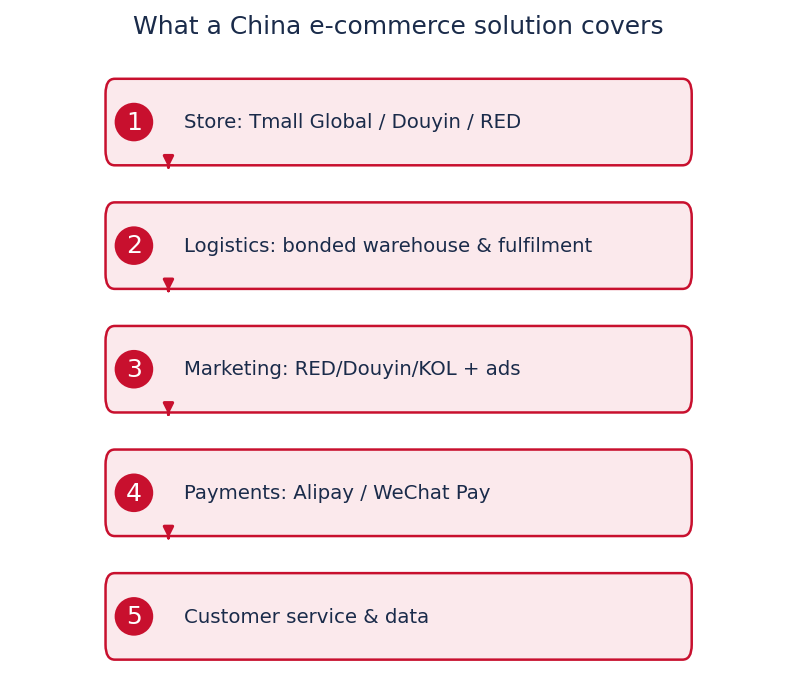
Fig. 1: What a China e-commerce solution covers
The solution, end to end
Store: Tmall Global / Douyin / RED.
Logistics: bonded warehouse, cross-border fulfilment.
Marketing: RED/Douyin seeding, KOLs, paid ads.
Payments & service: Alipay/WeChat Pay, Chinese support.
Getting started
Confirm your category is eligible for cross-border import, pick the right storefront for your category, localize listings and content into Simplified Chinese, and plan RED/Douyin demand generation. Most France brands work with a one-stop partner to run operations and Chinese-hours service.
Common questions from French brands
French brands — strong in beauty, wine, fashion and lifestyle — usually ask about category eligibility, claims rules and which storefront fits. Start by confirming the CBEC positive list for your category, then pick Tmall Global for breadth or RED/Douyin for content-led categories.
Check CBEC positive-list eligibility
Beauty/lifestyle → RED/Douyin content-led
Breadth/premium → Tmall Global
Mind claims and labelling rules
Bottom line
For France brands, cross-border e-commerce is the fastest, lowest-risk route into China: sell under your existing entity via Tmall Global, Douyin or RED, fulfil from bonded warehouses, and generate demand on RED/Douyin — ideally with a one-stop partner running operations and Chinese-language service.
FAQ
Do France brands need a Chinese company?
No — cross-border (CBEC) lets you sell under your existing entity.
Which storefront is best?
It depends on category — Tmall Global for breadth, RED/Douyin for content-led categories.
How fast can we launch?
Cross-border setup is relatively quick; demand generation builds over the following weeks.
Want to sell into China from France? shopfever runs end-to-end cross-border e-commerce for France brands — store, logistics, marketing and service. Talk to us. |
Why French brands do well in China
French brands enjoy exceptional standing with Chinese consumers, who strongly associate France with premium quality, heritage and the “art de vivre.” This affinity is strongest in beauty and cosmetics, wine and spirits, fashion and luxury, and gastronomy — categories where RED’s affluent, tier-1/2 audience actively researches French products before buying. For French brands, that pre-existing trust shortens the path from awareness to purchase, provided the brand shows up authentically on Chinese platforms.
Beauty & cosmetics — RED’s strongest category
Wine & spirits — heritage and provenance sell
Fashion & luxury — strong “made in France” premium
Gastronomy & fine food — growing cross-border demand
France-specific go-to-market notes
The fastest, lowest-risk entry for French brands is cross-border e-commerce, which lets you sell under your existing French entity and test demand before deeper commitment. Lean into French-origin storytelling — provenance, craftsmanship and authenticity — which resonates deeply on RED. For cosmetics, note that general cosmetics imported via cross-border can benefit from simplified requirements (including an exemption from mandatory animal testing that applies to many general cosmetics), while special-use cosmetics face stricter filing. Prepare EU export documentation and Chinese-language, compliant labelling from the outset.
Test cross-border first, under your French entity
Lead with provenance and craftsmanship storytelling
Check cosmetics filing (general vs special-use)
Prepare EU export docs and compliant Chinese labelling
A step-by-step launch for French brands
For French brands, a disciplined sequence beats a broad, unfocused launch. The goal early on is to prove that Chinese demand exists for your category and price point before committing heavier investment, then scale what works across storefronts and markets.
1. Confirm category eligibility for cross-border import
2. Choose one or two hero products to lead with
3. Localize listings, content and service into Simplified Chinese
4. Seed authentic RED/Douyin content to build awareness
5. Add a storefront (Tmall Global / RED / Douyin) to convert
6. Fulfil via bonded warehouse; measure and scale
Timeline, budget and partner considerations
Cross-border setup can move relatively quickly once documents and category eligibility are confirmed, but demand generation builds over the following weeks and months as content and search presence compound. Budget for three things beyond platform fees: localized content and creators, paid amplification, and Chinese-language service. Because day-to-day operations require Mandarin-speaking staff and platform know-how, many French brands work with a one-stop partner to run the store, marketing and service — turning a complex, multi-vendor project into a single, accountable relationship.
Working with a one-stop partner
Selling into China touches storefront, logistics, marketing, payments and service at once, and each requires Mandarin-speaking operations and platform expertise. Rather than coordinating a patchwork of vendors, most global brands work with a single cross-border partner that can join the pillars together, run day-to-day operations during Chinese business hours, and localize content and service properly. That turns a complex, multi-part project into one accountable relationship — freeing the brand to focus on product and positioning while demand, conversion and retention are managed end-to-end across China and, where relevant, wider Asian markets.


Comments